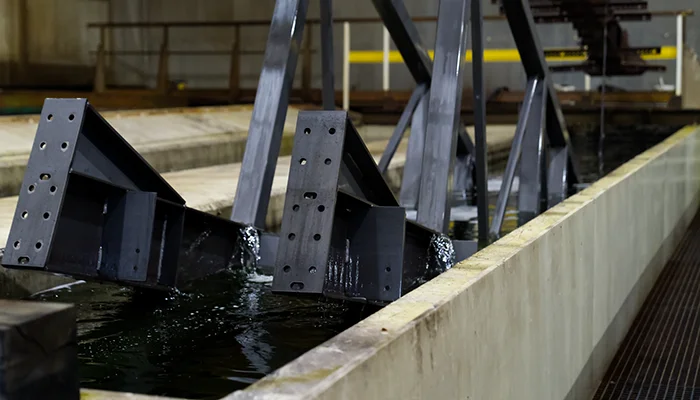
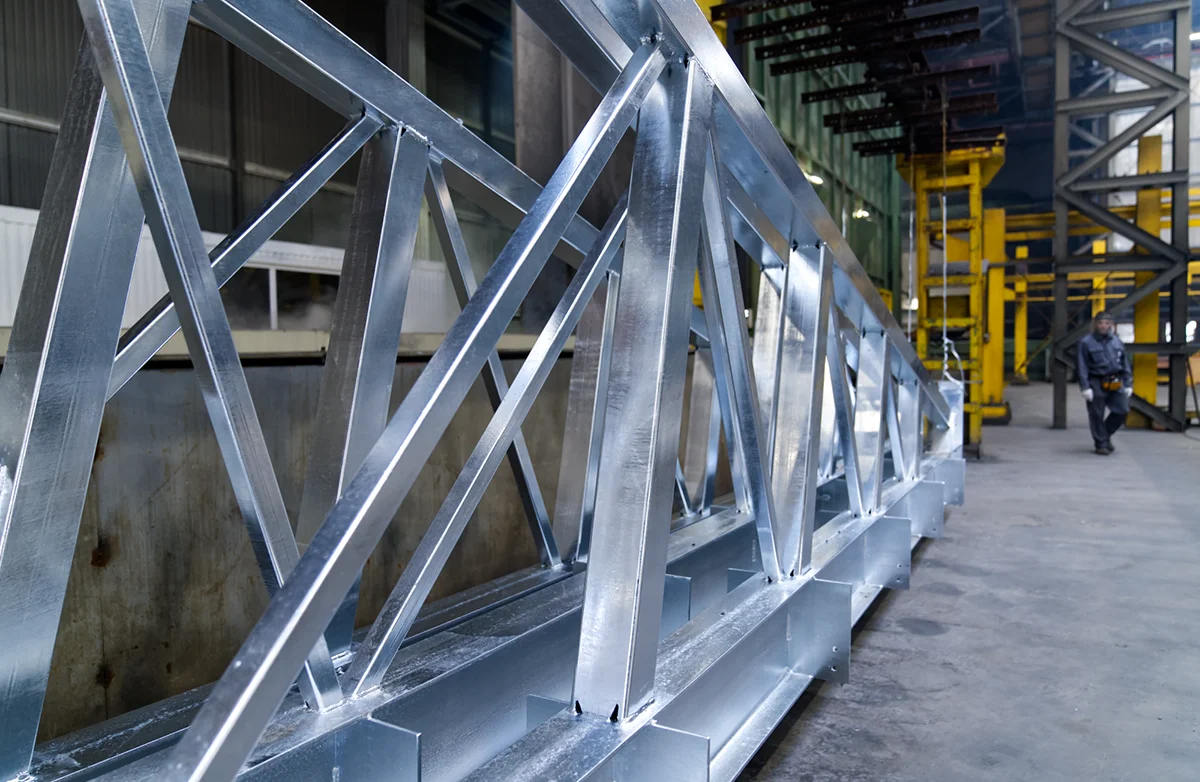
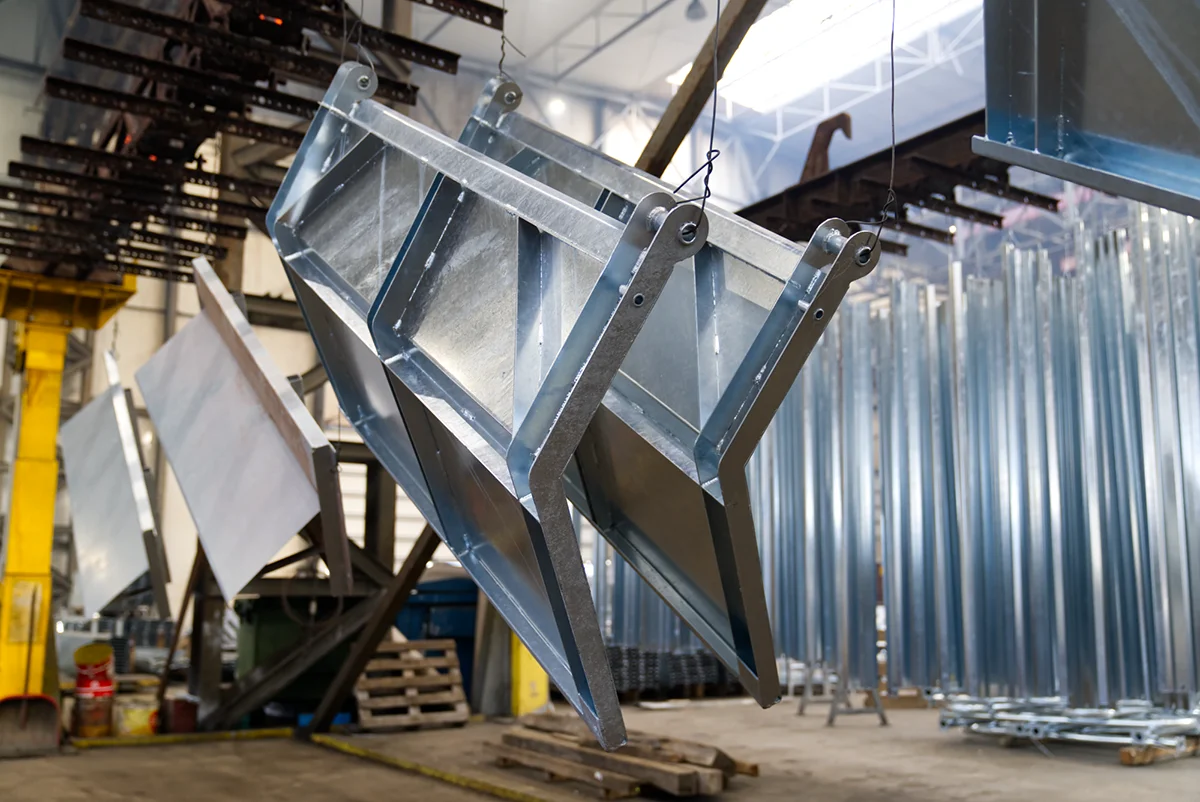
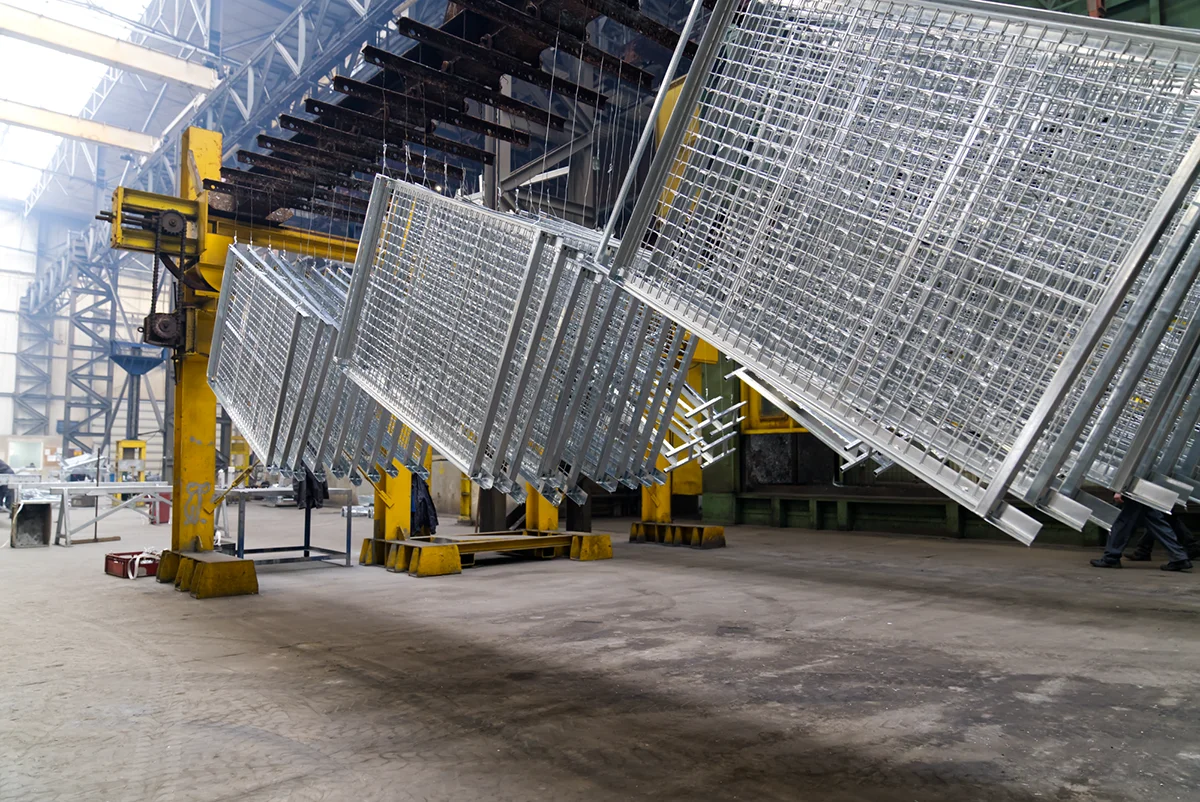
Simultaneous pickling of several components up to12.5 metres long
Acid pickling is the stage of preparing the steel surface before galvanizing. It removes contaminants, oxides, and rust by immersing the steel in an acidic solution, most commonly hydrochloric acid. This process is essential because it produces a clean, active surface, enabling the zinc to bond evenly and permanently with the steel.
2
Applying the Zinc Coating
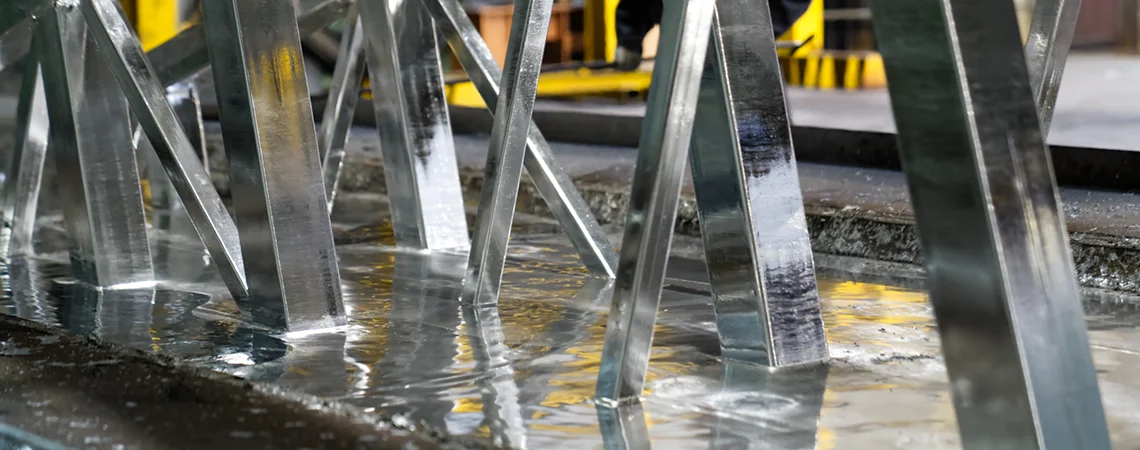
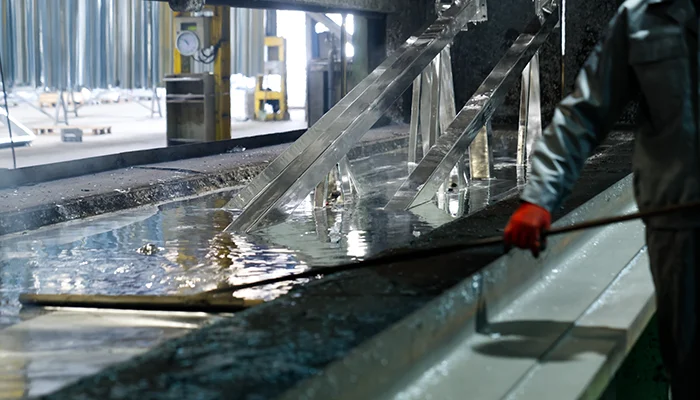
A 13-metre bath for galvanizing components up to 12.5 metres long
The zinc coating is applied by immersing the cleaned steel in molten zinc at a temperature of approximately 450°C. This allows the metals to react and form a durable protective layer. As zinc diffuses into the steel structure, alloy layers are created, providing high corrosion resistance.
3
Passivation
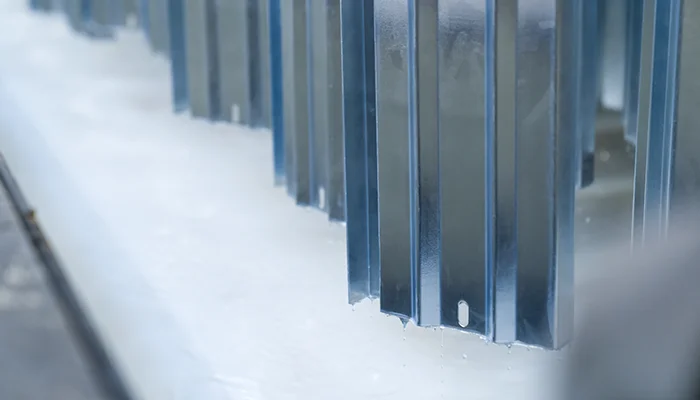
Passivation is the final stage of the galvanizing process. It involves applying a thin protective layer to the zinc coating to increase its resistance to white rust. This layer forms a protective barrier that slows the reaction between the zinc, moisture, and atmospheric conditions.